
BACKGROUND
Company Intranet
Jazwares emerged from the merger of four distinct toy companies, each operating with its own systems and processes for HR, IT support, time management, and internal communications. As the organization grew, employees struggled to efficiently request support, find pay and benefits information, and understand team ownership across the company. This created a need for a unified Intranet that could centralize resources, streamline workflows, and provide clear visibility into people, teams, and internal operations.
Role
Lead UX/UI Designer
Duration
12 Weeks
Team
Product Manager, UX Designer, User Researcher, 2 Software Engineers
Platform
Responsive Web App
The wins
Support Requests Dropped Significantly
By centralizing HR and IT resources into a single self-service intranet experience, employee support emails dropped by nearly 80% as employees were able to find answers without contacting HR or IT.
Critical Employee Information Became Instantly Findable
Pay, time off, benefits, and policies were centralized into a searchable employee hub, allowing employees to self-serve answers instead of chasing people for help.
Ownership Became Visible Across the Organization
A company-wide directory and org chart made roles, teams, and reporting lines transparent, eliminating confusion around who owns what.
Jazwares had no centralized employee experience, leading to constant emails to HR and IT asking for help.
My Role
I led the end-to-end design of the intranet experience, partnering with our user researcher who gathered insights directly from employees. I collaborated closely with HR, IT, and operations stakeholders while owning the design and information architecture to transform fragmented tools and processes into a single, intuitive employee platform.

How might we reduce operational support burden by giving employees a clear, centralized place to access HR and IT resources?
What The Stakeholder Interviews Told Us
• Stakeholders expressed a strong need for a single place to submit requests and track their status end to end.
• Employee Engagement teams wanted a centralized way to communicate events, updates, and announcements without relying on repeated email sends.
• IT teams were frustrated by back-and-forth clarification emails and emphasized the need for structured intake forms that captured all required information upfront.
What The Employees Told Us
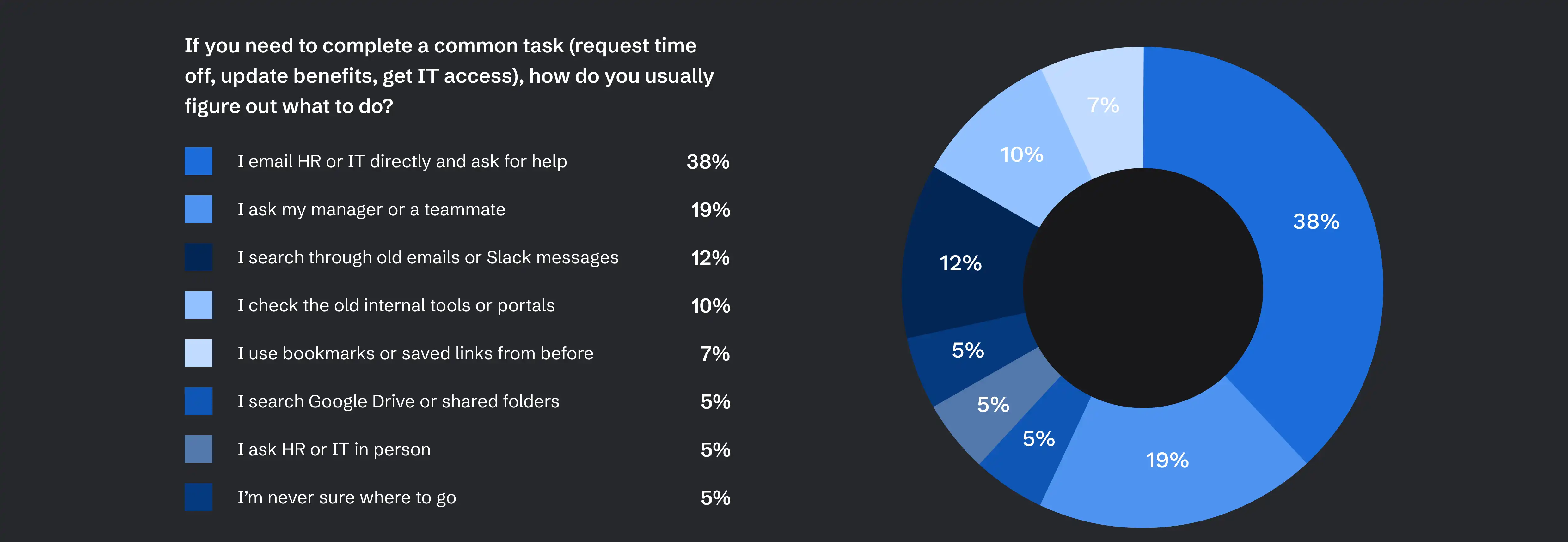
To ground my design decisions in real needs, we sent a company-wide survey to gather insights on how employees were navigating internal tools, accessing resources, and staying informed. The responses highlighted major gaps in communication, visibility, and workflow efficiency, which gave us a clear direction for what the new platform needed to solve.

KEY TAKEAWAY #1
Employees struggled to request IT, HR, and operational support efficiently
of employees said they “very often” run into friction when trying to access internal forms, tools, or support.
“I usually just ask someone because I don’t know where the form is or even what it’s called.”
“There are so many places to check. I never know which one is the right one.”
KEY TAKEAWAY #2
Pay, time off, and benefits information was hard to find
of employees said they don’t proactively stay informed about updates, while another 40% rely on coworkers or email chains to find answers.
“Unless someone mentions it in a meeting, I probably won’t see it.”
“I’ve missed deadlines before because I didn’t know the process had changed.”
KEY TAKEAWAY #3
Employees lacked visibility into people and ownership
of employees said they don’t know who to contact in other departments, and 36% said they have to ask around to find the right person.
“If I need help from another team, I usually DM someone and hope they know who to ask.”
“We need a directory or something...I shouldn’t have to message random people to get help.”
Shifting the Design Lens From Stakeholders to Employees
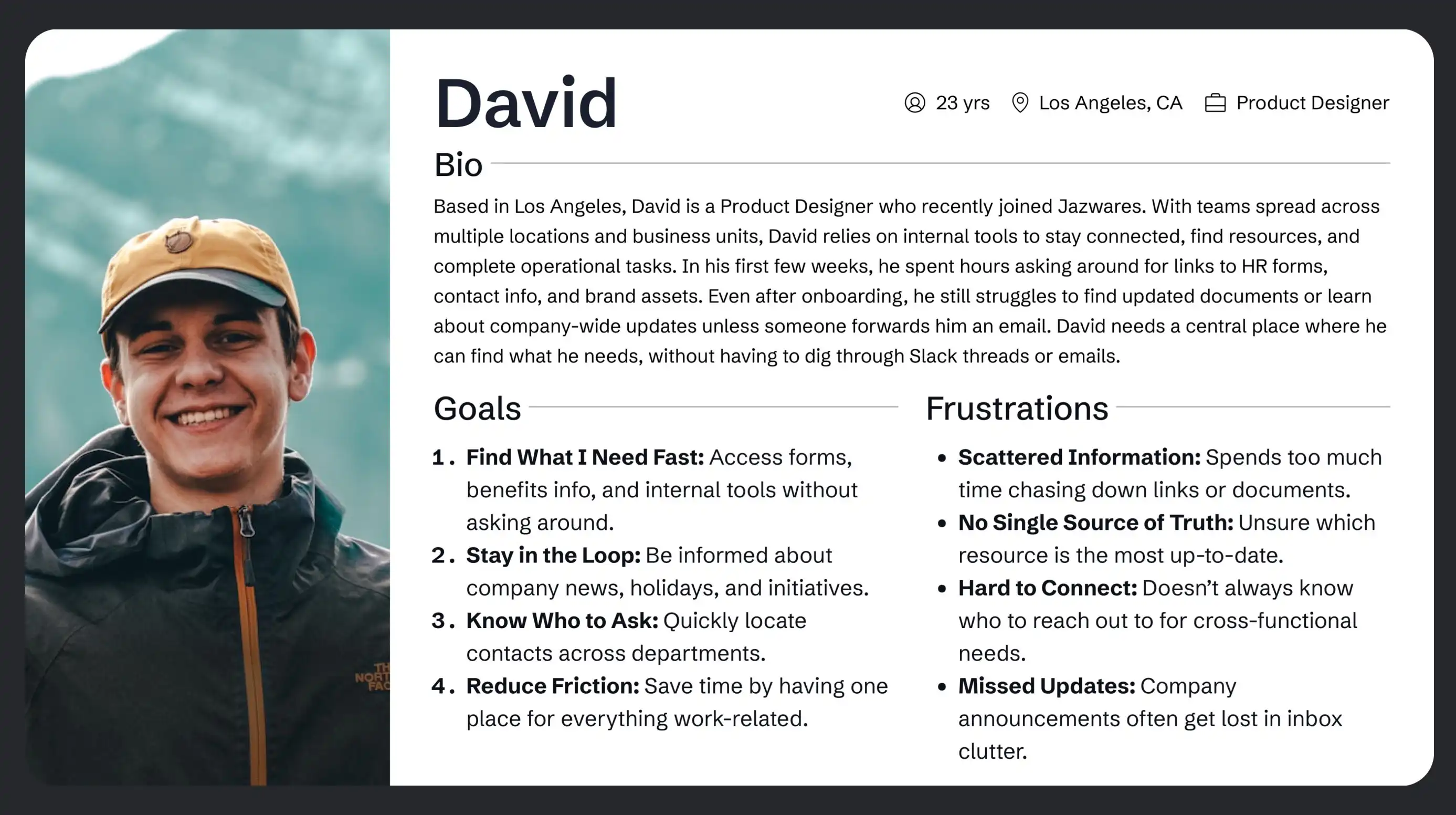
To ground our design decisions in reality, we created a user persona based on survey responses and internal interviews. This helped us shift focus from assumptions to actual employee experiences. We centered our persona around a regular employee, not an admin or executive, someone navigating scattered resources, unclear contacts, and inconsistent access to important information.
Organizing Every Employee Need
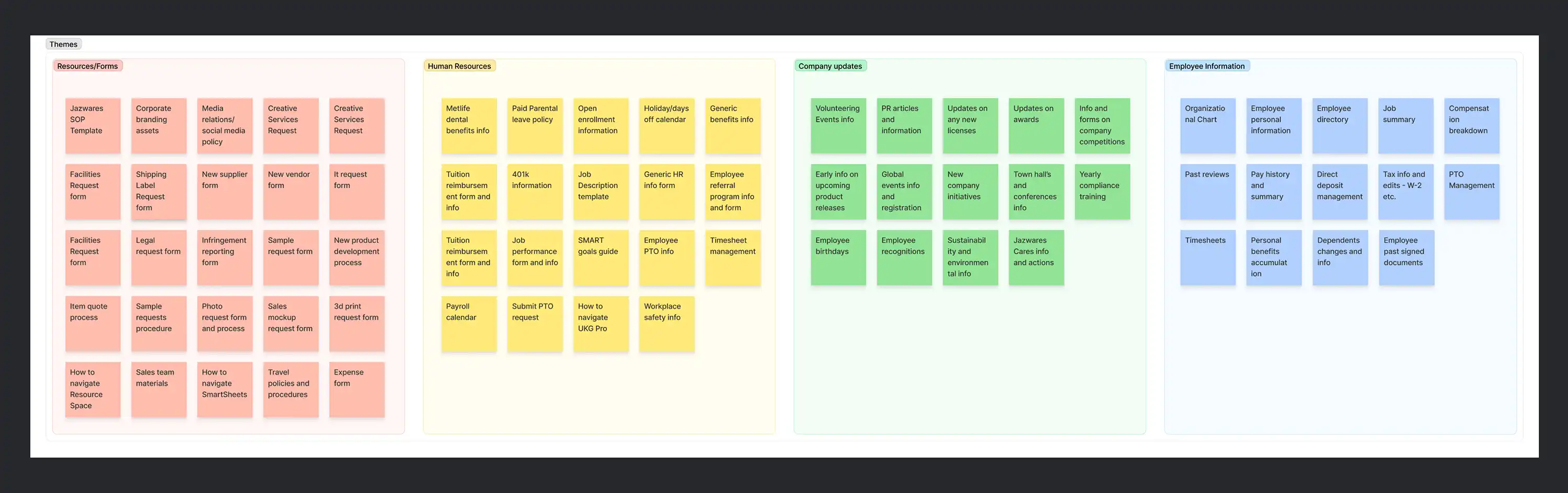
To better understand how employees were navigating the overwhelming landscape of internal tools, we ran an affinity mapping exercise. By grouping these use cases, forms, and requests into thematic clusters, we were able to uncover patterns in behavior and pain points, what was being used, what was missing, and where people were getting stuck. These insights helped shape the foundation for the platform’s information architecture.
USABILITY TESTING
Initial Dashboard Usability Testing
The process
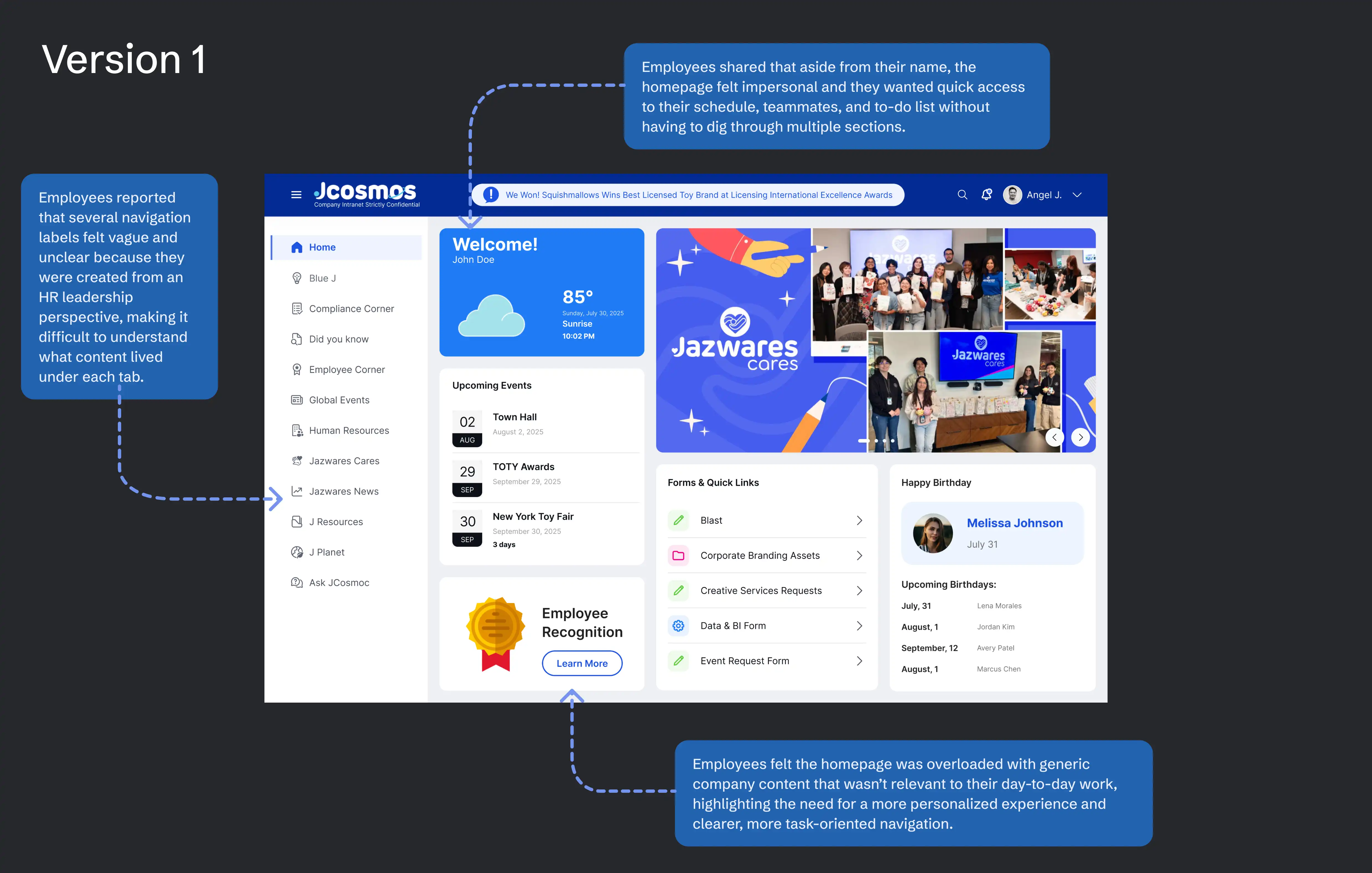
We conducted usability testing with a mix of new hires and long-tenured employees to ensure the dashboard experience worked for both onboarding and day-to-day workflows. Participants were asked to complete common tasks like finding HR forms, requesting IT support, and locating teammates using an interactive prototype.
The learnings
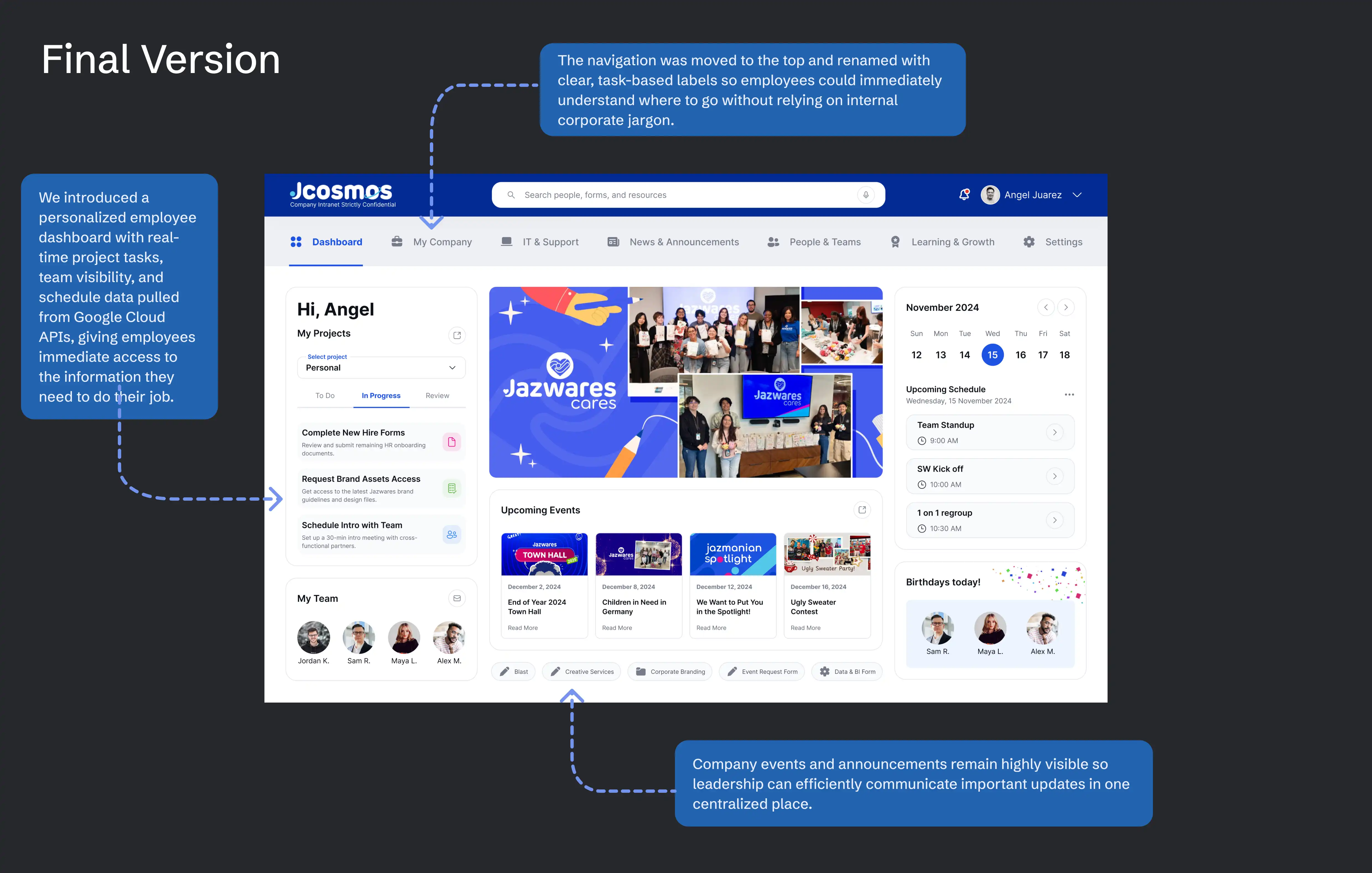
We learned that employees struggled with unclear navigation labels, lacked visibility into personal work information, and felt the dashboard was too focused on generic company content instead of their daily needs. This directly informed our decision to simplify the navigation, surface personal tasks and schedules, and prioritize self-service tools over corporate jargon.
DESIGNING THE EXPERIENCE
KEY SOLUTION #1
A single location that streamlines IT, HR, and facilities requests, replacing confusion and email chains with clear workflows.
Insight: Employees struggled to request IT, HR, and operational support efficiently.
KEY SOLUTION #2
An employee self-service section that makes pay, time off, and benefits easy to find, understand, and manage in one place.
Insight: Pay, time off, and benefits information was hard to find
KEY SOLUTION #3
A centralized directory and org chart that clearly shows who owns what, who reports to who, and how to contact the right person.
Insight: Employees lacked visibility into people and ownership
Built with Jazwares Playkit
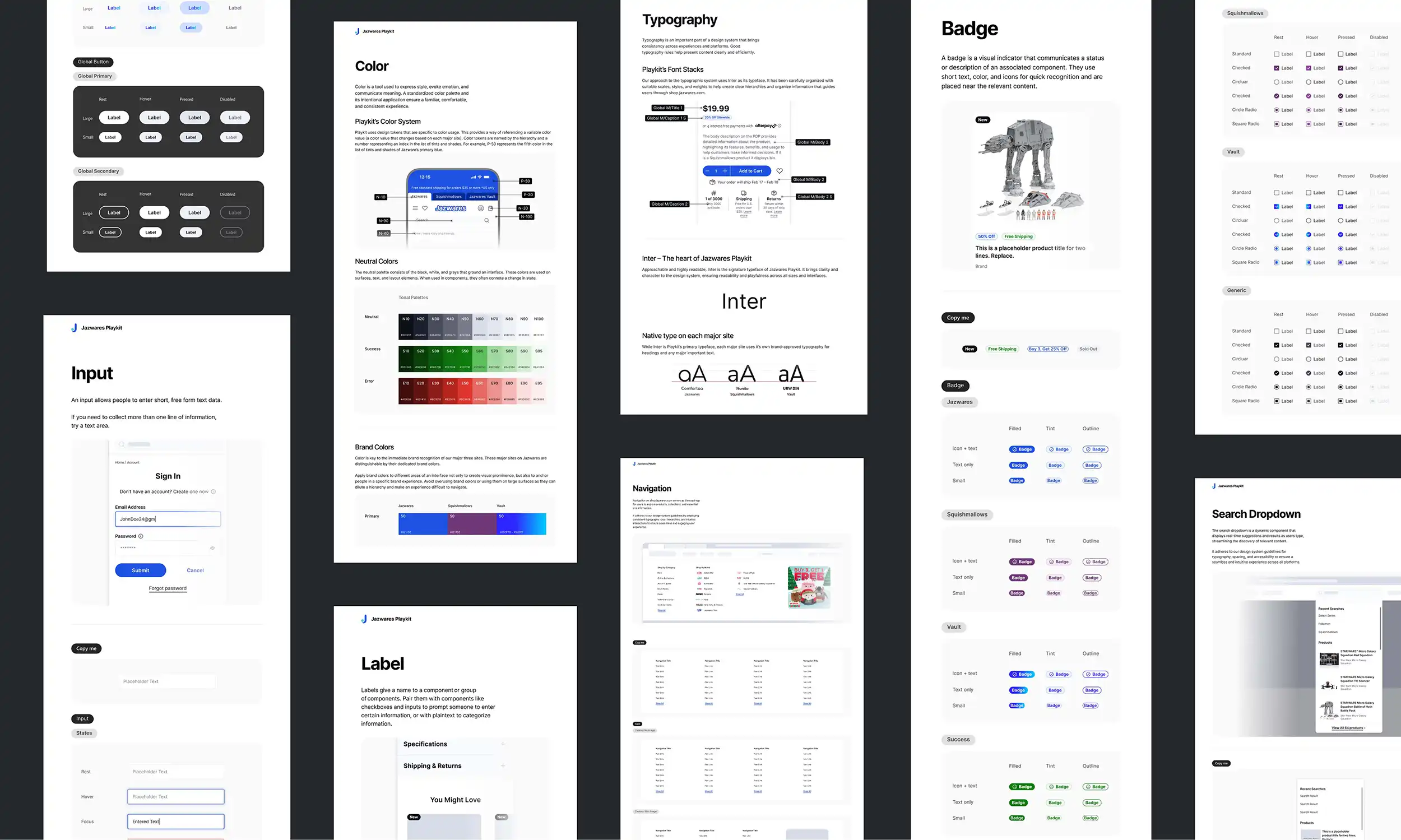
To ensure visual consistency and accelerate delivery, I leveraged Jazwares’ internal design system, which I previously helped build and maintain. Using established components, typography, spacing, and interaction patterns allowed the experience to feel immediately familiar and on-brand while dramatically reducing design time compared to starting from scratch. This approach enabled me to focus more deeply on solving user problems and refining key moments in the experience rather than rebuilding foundational UI patterns.
Reflection
JCosmos has transformed the employee experience at Jazwares by making onboarding dramatically easier and day-to-day work more informed and frictionless. Even as an employee myself, I genuinely enjoy using the product to view my information, track time off, and stay up to date with company updates. Designing this platform was especially rewarding because it required balancing the needs of HR and IT while staying focused on the employee experience.
Next Steps
Since launch, JCosmos has continued to evolve as a core internal platform at Jazwares. We are actively expanding its capabilities with features like Okta secure login, an employee store, live conference streaming, and centralized learning resources. The tech team regularly receives feedback, feature requests, and support questions that often make their way back to me, giving me ongoing opportunities to iterate on the experience.