BACKGROUND
Love Moda DTC App
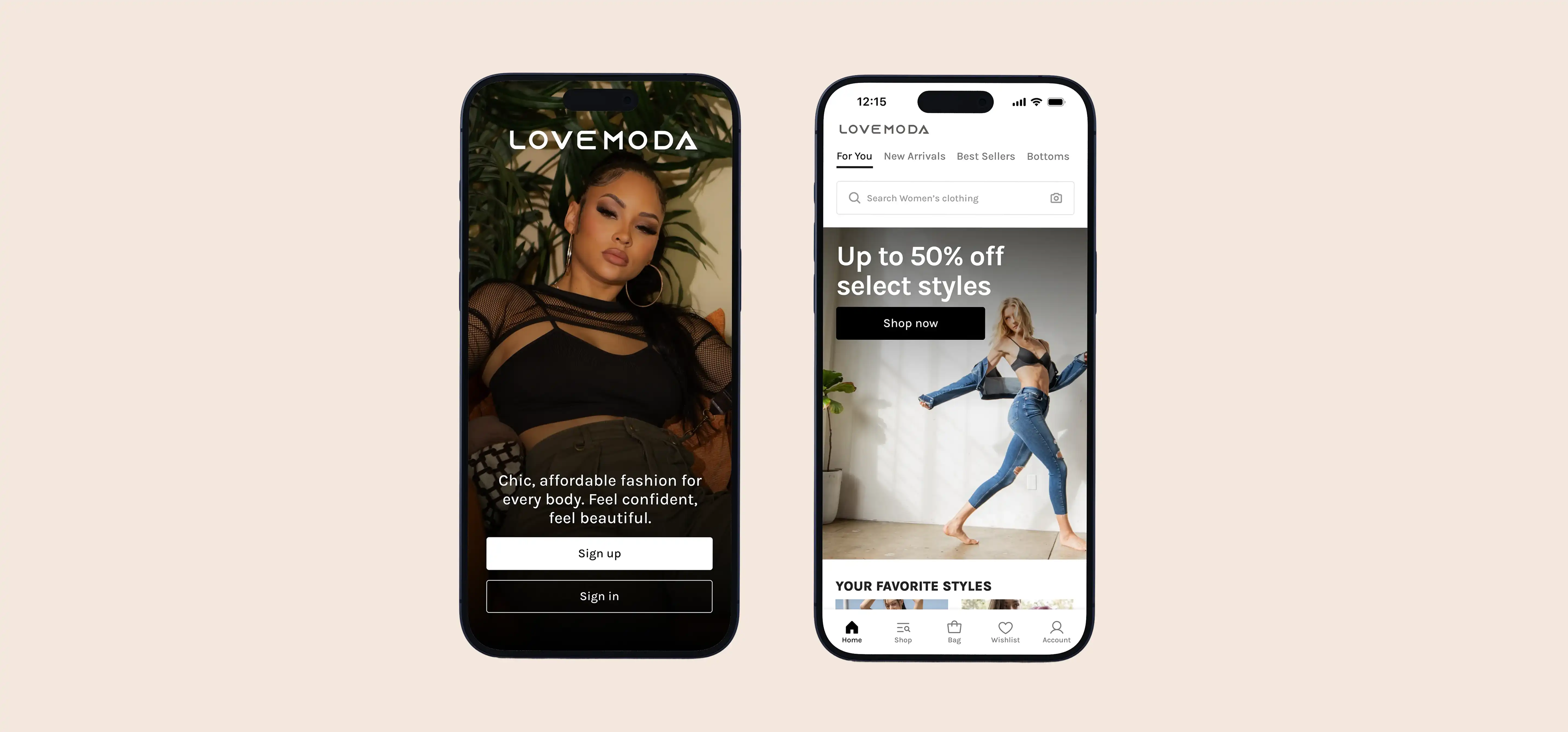
After completing a full redesign of Love Moda’s website, the brand’s VP wanted a mobile app to support their expansion into DTC. Love Moda is the direct-to-consumer arm of American Bazi, a large B2B women’s apparel company that had already found strong success on Amazon. As the sole designer, I owned the end-to-end app experience, translating the brand’s momentum into a mobile-first product.
Role
UX Designer
Duration
4 Months
Team
UX Designer, Graphic Designer, Project Manager
Platform
iOS & Android
The wins
Deepened My Understanding of the Women’s Fashion Market
Designing the Love Moda app gave me hands-on insight into women’s fashion trends, fit expectations, shopping behaviors, and how customers browse and buy apparel on mobile.
Identified Strong Opportunities for Personalization
Through research and exploration, I uncovered meaningful opportunities to personalize the shopping experience based on style preferences, fit, and category interest.
Built Experience Selecting and Partnering With Vendors
I learned how to scope product requirements, evaluate external development partners, and define clear expectations to ensure a smooth transition from design to build.
High first-time demand existed, but the website limited retention, personalization, and repeat buying.
My Role
I was initially brought on to redesign Love Moda’s existing Shopify website, which had been visually modeled after Zara but lacked a clear, user-friendly shopping experience. After launching the redesigned site, Google Analytics revealed strong first-time purchase behavior but low repeat engagement. Based on these insights, leadership asked me to lead the design of a mobile app. I owned the end-to-end app experience, from defining the product vision and and partnering with a developer.

How might we increase repeat purchases and retention by delivering a personalized, app-native shopping experience?
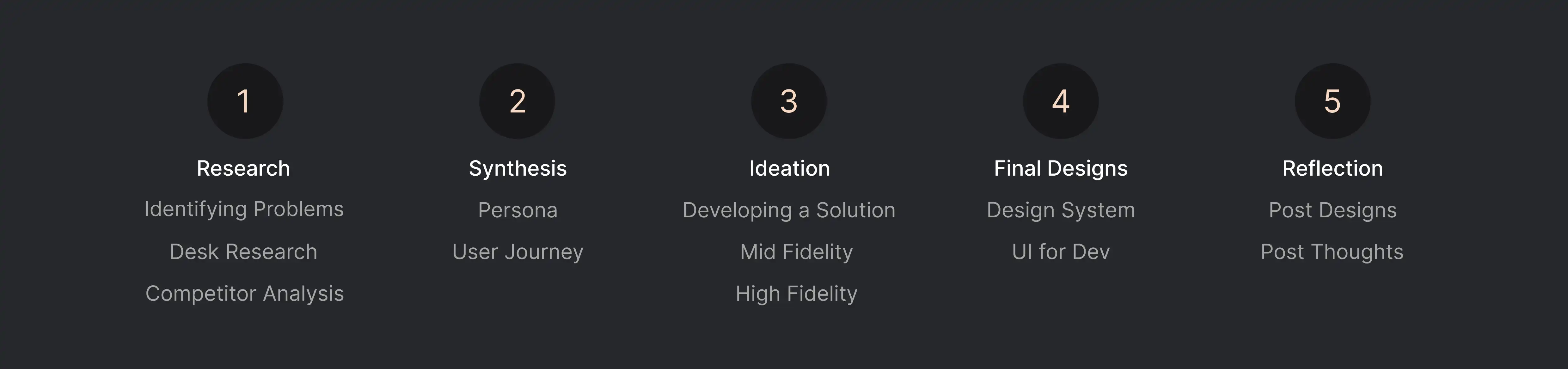
The Process
UNDERSTANDING OUR USERS
Google Analytics Insights
72% of Purchases Came From First-Time Buyers
Most users treated the DTC site as a single-purpose destination, arriving to browse or buy, then leaving without returning.
64% of Traffic Was Mobile, But Only 31% Returned
When users did return, it was typically weeks later and driven by external triggers such as social posts or email campaigns.
Industry Insights

App Shoppers Are More Loyal Than Web Shoppers
Industry research consistently shows that users who shop through mobile apps have higher repeat purchase rates and lifetime value than web-only shoppers, driven by faster flows, saved preferences, and habitual usage.

Personalization Increases Conversion and Return Rates
Fashion brands that personalize discovery based on style, fit, and preference see higher engagement and repeat visits, especially among younger, mobile-first shoppers.

Fit Uncertainty Is a Top Cause of Returns in Women’s Apparel
Across the women’s fashion industry, size and fit confusion remains one of the leading reasons for cart abandonment and returns, particularly for first-time buyers.
Learning From Market Leaders to Shape a More Personal Experience
My competitive review surfaced a consistent gap across fashion apps: strong product access but limited personalization. While competitors excelled at scale, speed, or trust, few balanced all three. These insights directly informed our focus on guided onboarding, clearer fit information, and a more intentional shopping flow designed to convert first-time buyers into repeat customers.

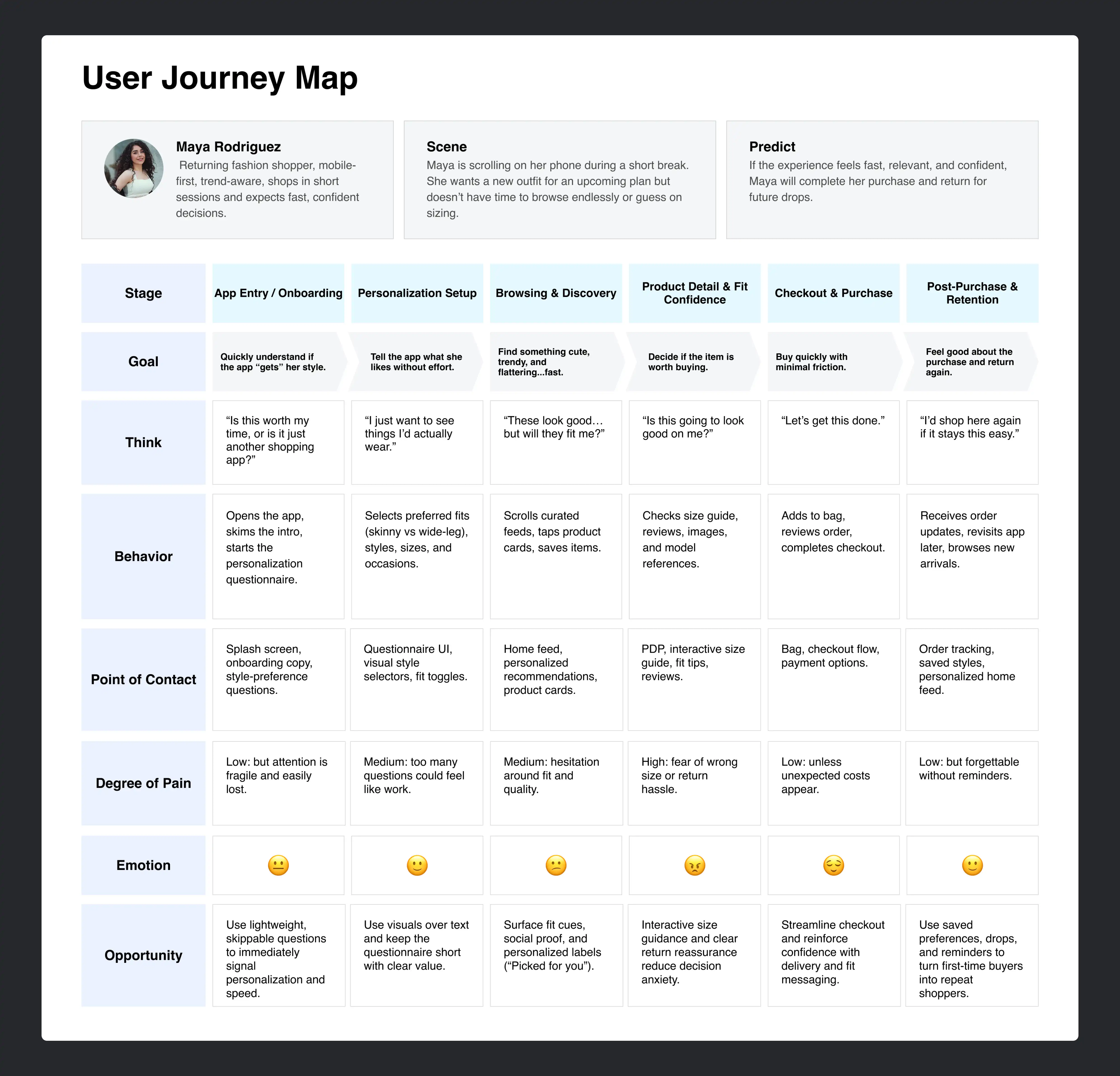
Mapping the Journey to Catch What Could Be Missed
Before moving into detailed flows and screens, I mapped a potential end-to-end user journey to pressure-test the experience from first open to repeat purchase. This exercise helped ensure no critical moments were overlooked, especially in areas where users hesitate, abandon, or lose confidence. By visualizing goals, emotions, and friction at each stage, I was able to design intentionally, smoothing transitions, reinforcing trust, and aligning features like personalization and sizing with the moments they mattered most.
DESIGNING THE EXPERIENCE
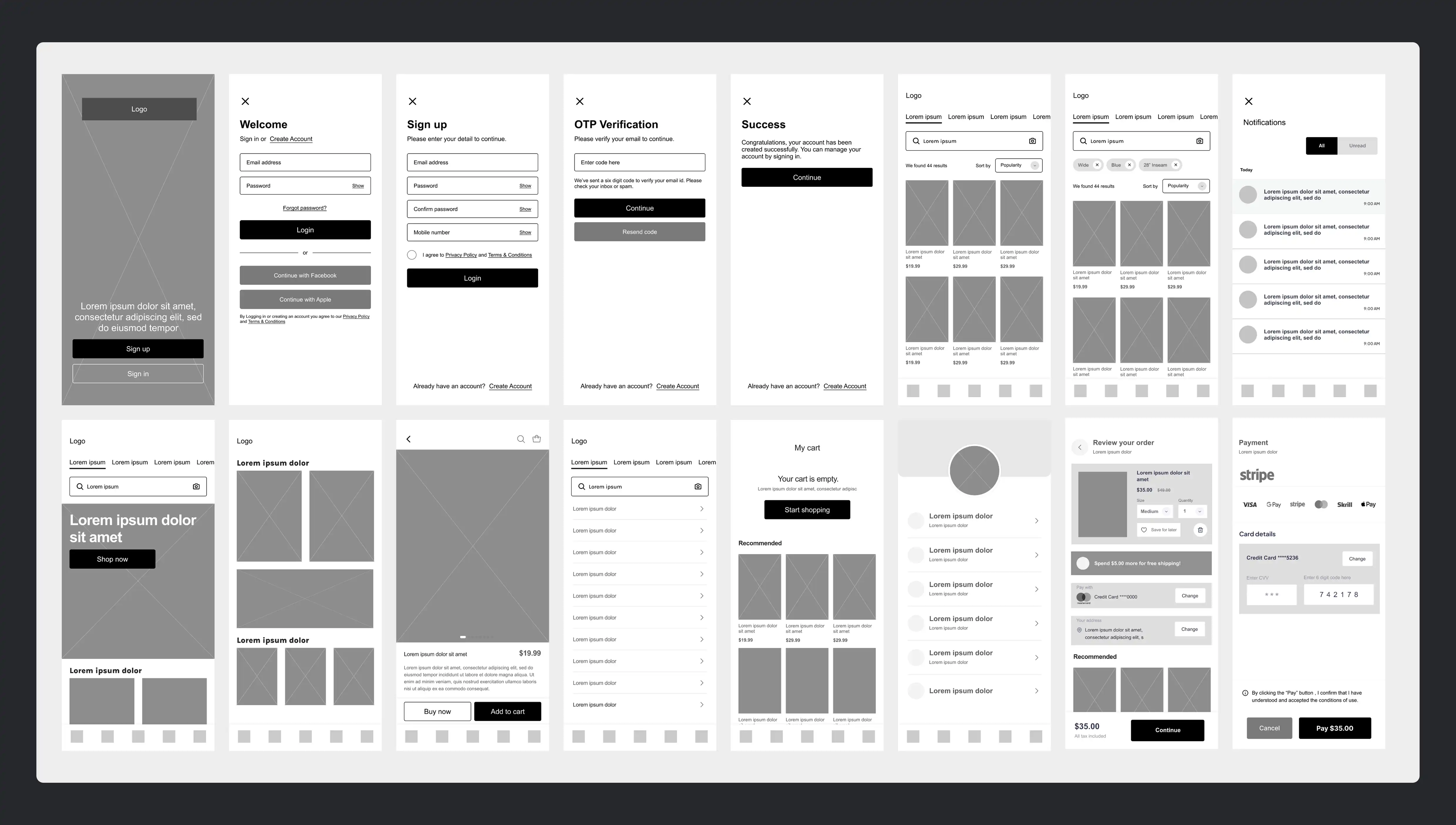
Finalizing the Main Screens Before Adding Visual Weight
By working in mid-fidelity, I focused on usability and structure first, making sure the core shopping experience felt intuitive and complete before moving into high-fidelity design.
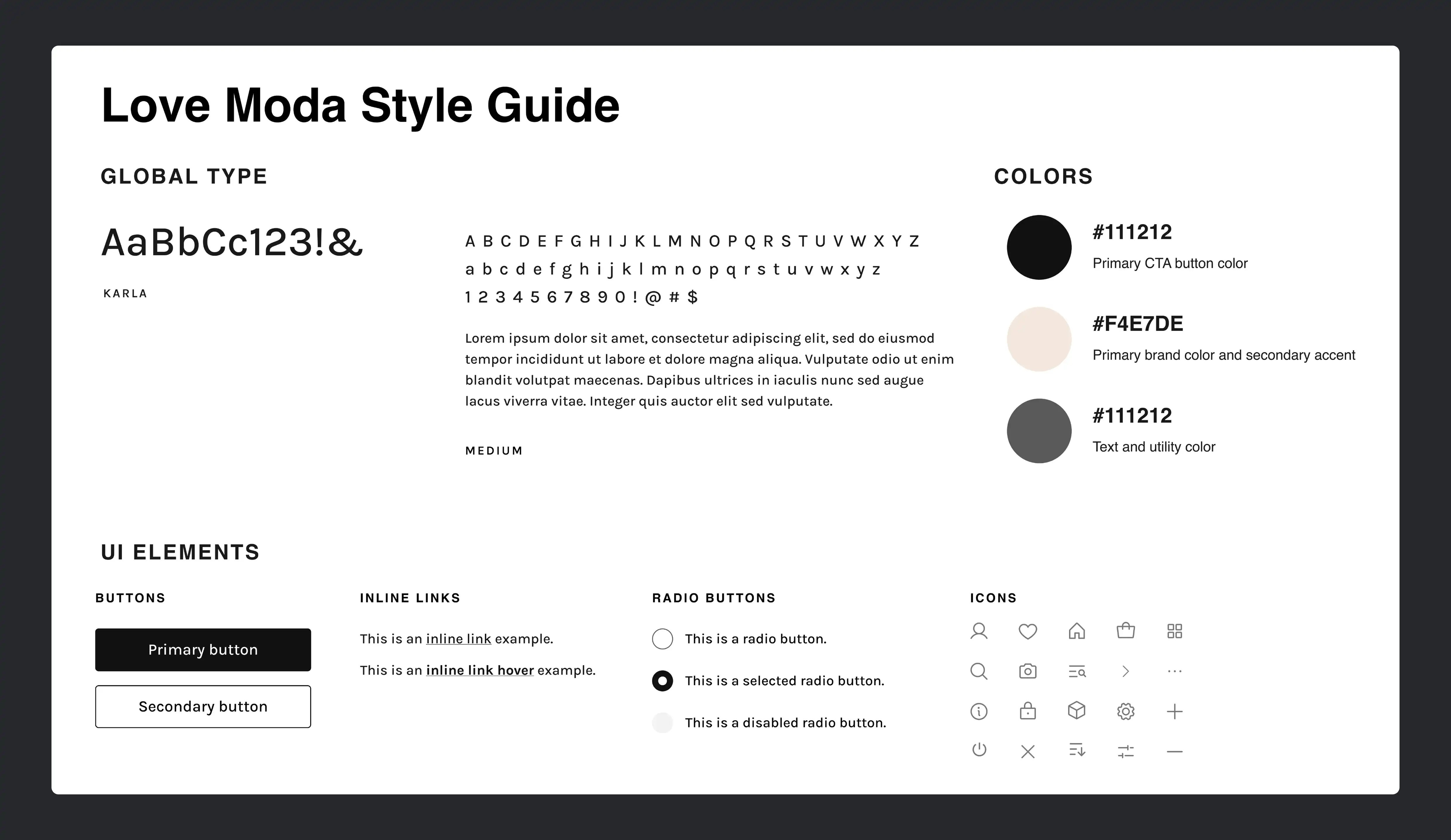
A Phased Approach to the Design System
Due to tight timelines, I didn’t create a full, standalone design system upfront. Instead, I focused on defining core foundations such as color, typography, and key interactive elements to ensure visual consistency, accessibility, and stakeholder clarity while moving quickly toward approval. The intent was to validate the product direction first, then formalize a complete design system once the app moved into active development.
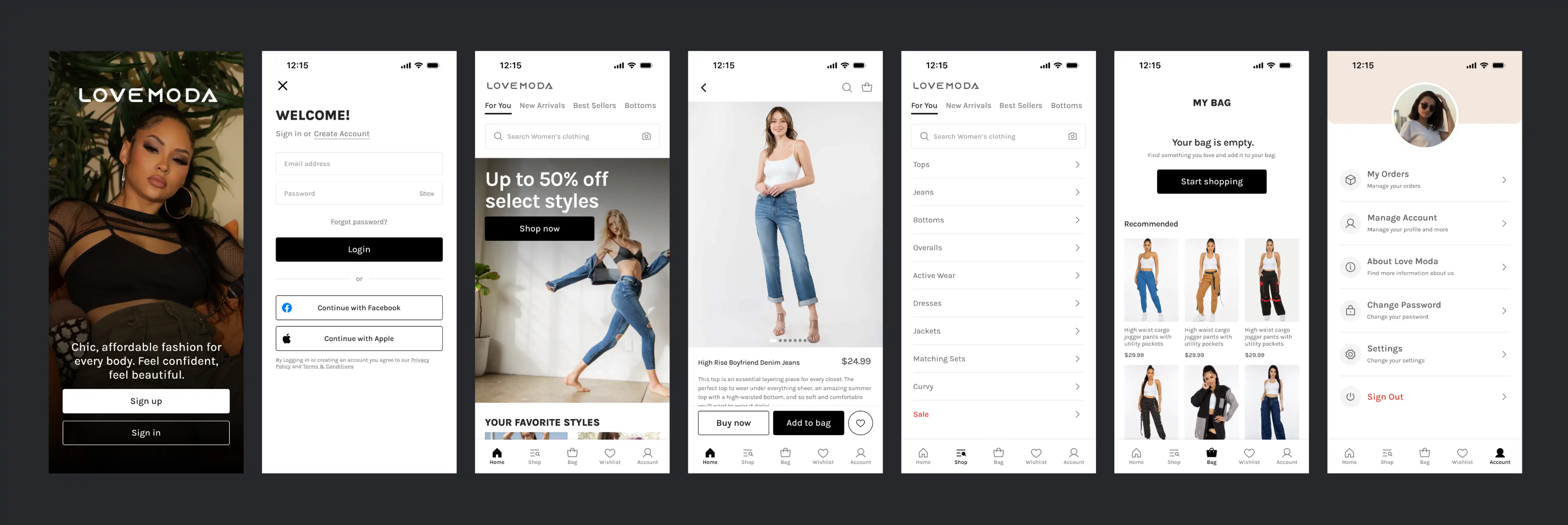
Ui for Launch
Designed and shipped a clean, shopping experience that streamlined discovery, product exploration, and checkout to support repeat purchases at launch.
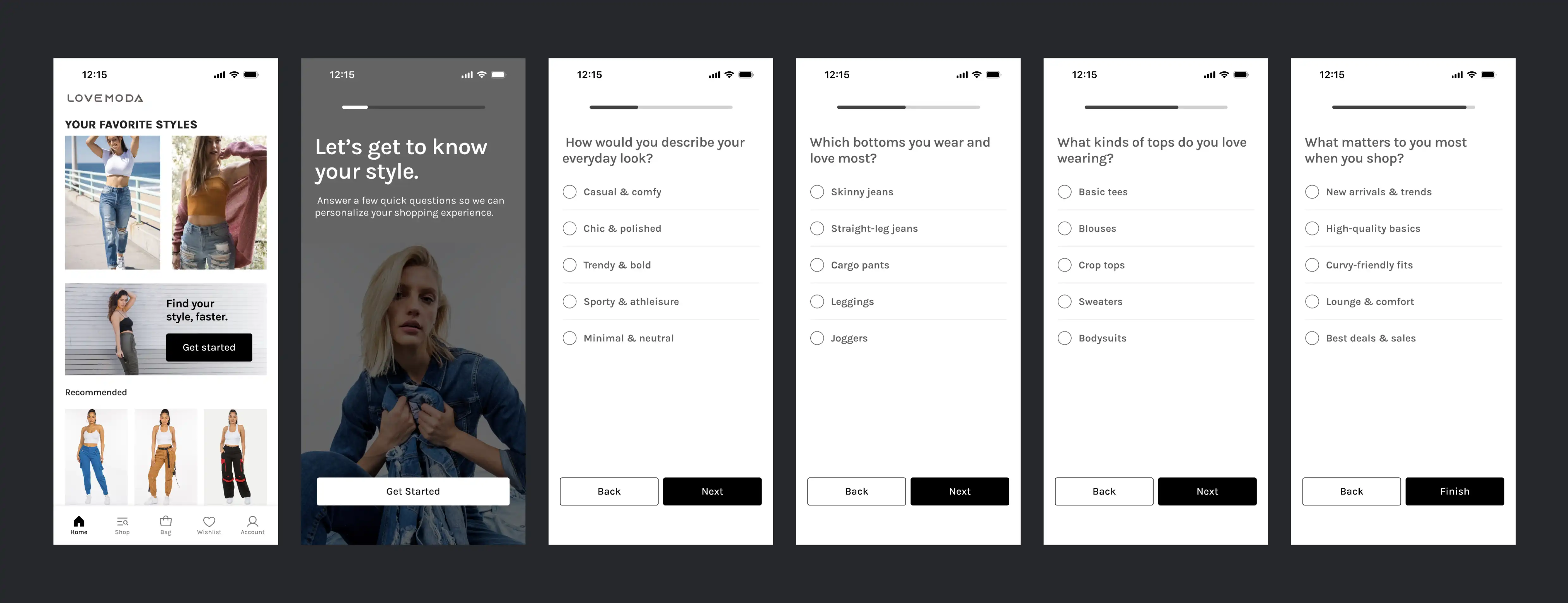
Turning Style Preferences Into Personalized Shopping
Market research showed that most fashion apps relied on generic feeds, so I introduced a lightweight style questionnaire to quickly understand each user’s preferences. These responses directly informed the Home and Recommended experiences, helping shoppers see more relevant products from their very first session and encouraging repeat engagement.
Making Sizing Simple to Reduce Purchase Friction
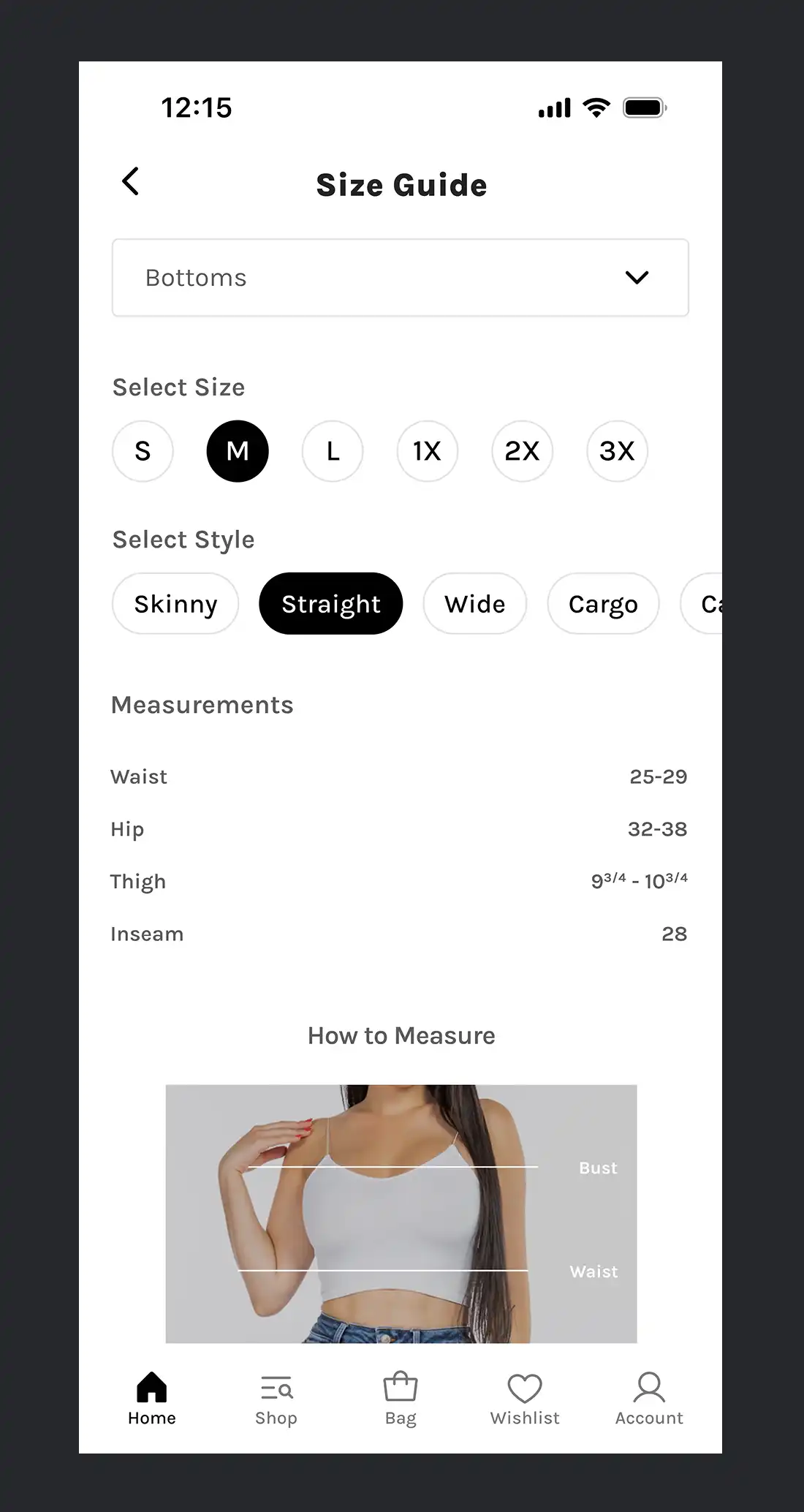
Industry research showed that sizing uncertainty was the biggest barrier to purchasing, so we designed a clear, interactive size guide that removes guesswork. By combining measurements, fit styles, and visual “how to measure” guidance in one place, we helped shoppers feel confident choosing the right size before adding to bag.
Reflection
Working on the Love Moda app was a valuable learning experience, especially designing without an in-house development team and preparing files clear enough for any external vendor to pick up and build from. I also had to advocate for research and a proper design process, pushing back on leadership’s instinct to jump straight into high-fidelity screens in order to create a more thoughtful, user-centered product.
Next Steps
After finalizing the designs and preparing development-ready files, the next step was to source and onboard a development partner. However, during this phase the company began restructuring and I was ultimately laid off as the DTC branch was deprioritized. While the parent company continued operating, the Love Moda app was paused; months later I was contacted about reviving the product after leadership explored reacquiring the DTC arm, but I was no longer available to rejoin.